![Mega Culture Television [Everything Culture And Tourism]](https://www.mymctvonline.com/wp-content/uploads/2023/08/logo.png)
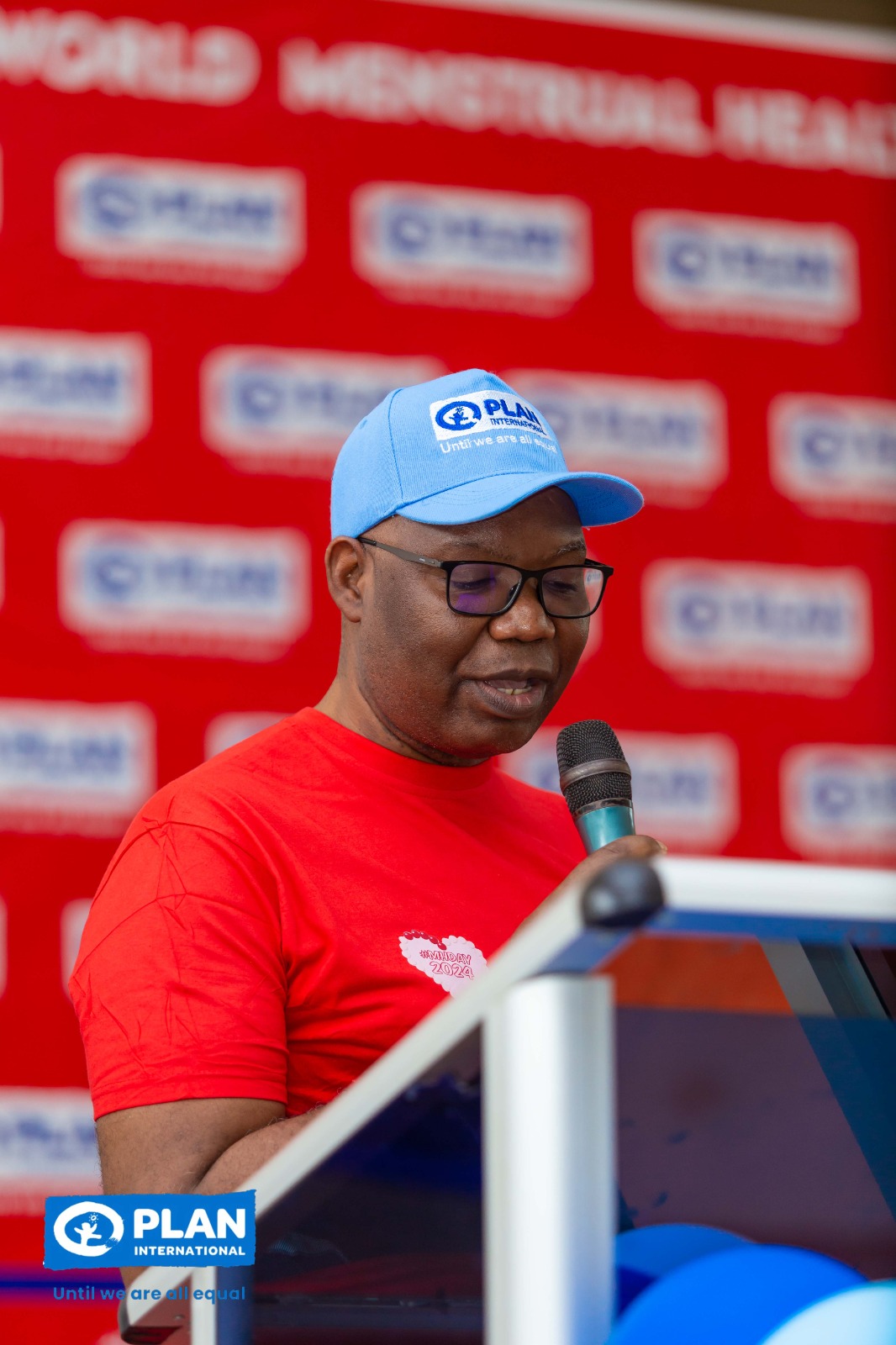
Mr. Constant Tchona, Country Director of Plan International Ghana, has called on governments to allocate sufficient resources for menstrual programs and monitor the implementation of these policies to ensure accountability and impact. He emphasized the importance of integrating menstrual health into national health and education policies.
In his address to commemorate the 2024 Menstrual Health and Hygiene Day at Jasikan in the Oti Region, Mr. Tchona acknowledged the government’s efforts in reducing taxes on materials used to produce sanitary pads, making them more affordable. However, he stressed that more needs to be done to achieve a “Period-Friendly World” and strive towards a global objective.
“To achieve ‘Together for a Period-Friendly World,’ we must strive towards a global objective of ensuring that menstrual health is rightly positioned as both a human and a health right for girls, young women, and women,” Mr. Tchona said.
He urged governments and stakeholders to invest in the construction and maintenance of menstrual or girl-friendly infrastructure, particularly in schools, workplaces, and public spaces.
He also called for the engagement of community leaders, grassroots organizations, and men and boys as allies to help dismantle harmful norms and promote positive attitudes towards menstruation.

Mr. Tchona highlighted the need to eliminate myths and misconceptions surrounding menstruation through age-appropriate and culturally sensitive education programs.
He emphasized the importance of eliminating financial barriers to ensure that all menstruators, regardless of their socio-economic status, have access to a range of safe and hygienic menstrual products.

He noted that Plan International Ghana and its partners work year-round to break the taboos and end the stigma surrounding menstruation, as well as to mobilize the funding required for large-scale action. The organization raises awareness about the challenges regarding access to menstrual products, education about menstruation, and period-friendly sanitation facilities in Ghana.
Mr. Tchona also called for recognition of the environmental impact of menstrual products, such as single-use pads and tampons, and their significant contribution to plastic pollution. “As we advocate for menstrual hygiene, let’s also promote sustainable alternatives such as menstrual cups, reusable pads, and biodegradable options,” he said.

Mr. Frank K. Boamah, Headmaster of Bueman Senior High School (SHS), highlighted the challenges his school faces due to its high female population. “Many of our girls lack access to menstrual products and adequate facilities to manage their periods,” he said. He appealed to Plan International Ghana and other stakeholders to construct a 10-seater gender-friendly KVIP toilet facility for the school.

Mr. Boamah urged policymakers to prioritize menstrual health issues due to their important role in human rights, public health, and gender equality. He pointed out that addressing these issues is crucial to eliminating period poverty, which affects girls who struggle to afford menstrual products.

During the celebration, over 500 reusable sanitary pads were distributed to girls at Bueman SHS by Plan International Ghana. The event was held under the theme “Together for a Period-Friendly World.”